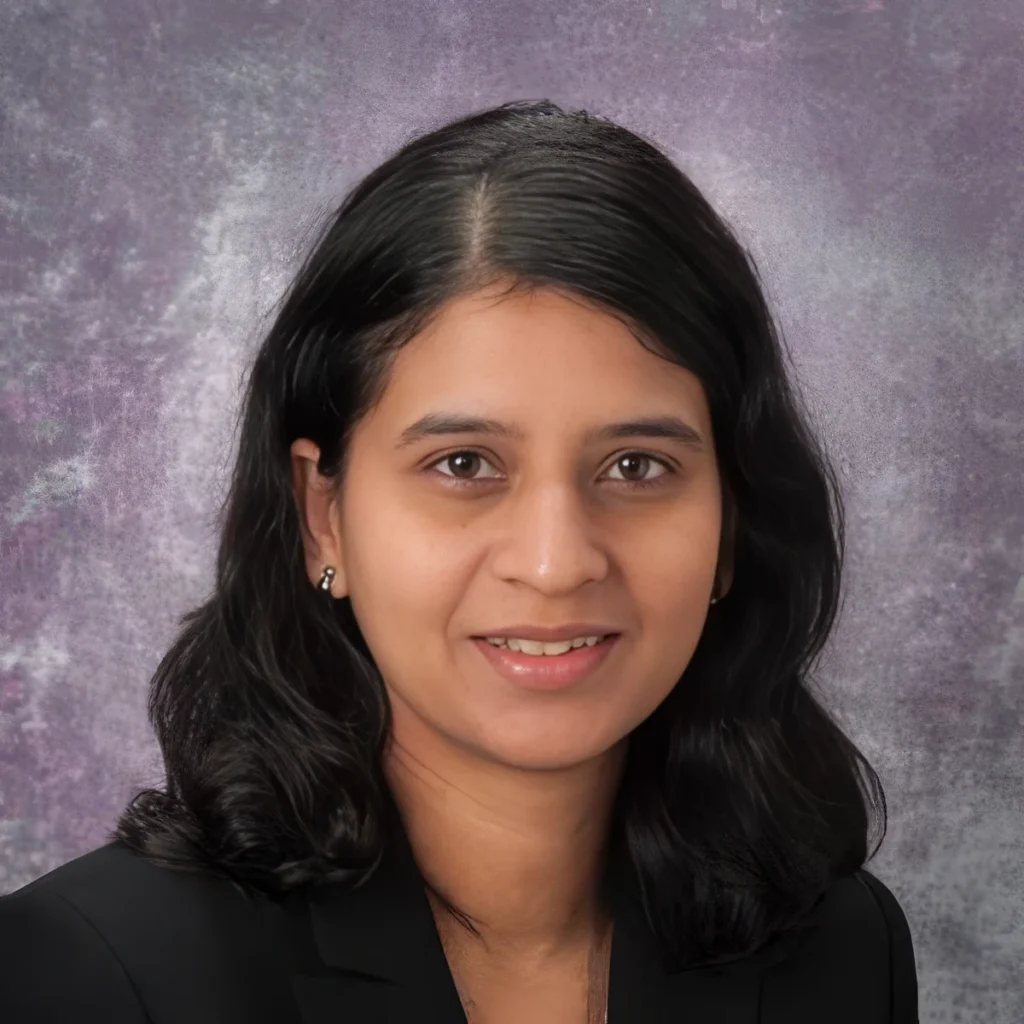


Associate Professor of Pediatrics, University of Pittsburgh
Director, Children’s Center for NeuroGenomics (CCNG)
UPMC Children’s Hospital of Pittsburgh
What keeps you going on the hard days when progress feels slow?
The children that I care for. Even in the face of incredibly difficult circumstances, their resilience is remarkable – it is that strength that stays with me and drives me forward.
If you could say one thing directly to families impacted by Krabbe, what would it be
Families are central to everything we do. This incredibly challenging field is advancing because of the hard questions you ask, the answers you seek, and the way your advocacy brings the clinical and research communities together. While we may not have the answers yet, our goal at Pittsburgh is to always walk this journey with you.
How do patient families influence or motivate your work?
They influence everything! I think of families as not just part of the care team but as true partners in every sense. No one understands these children more deeply than their parents and that perspective guides everything we do at the CCNG – both clinically and for planning and asking the right research questions. Thanks to the tireless efforts of our families, the field is moving forward in small but sure steps – newborn screening, earlier intervention and the horizon of novel therapeutics is now in sight.
Can you share a moment in your research that really stuck with you emotionally?
The most powerful movement for me is not in our lab – they’re in clinic. Sitting with families and working with their children has left an indelible mark on me as a physician. Everyday walking into the CCNG space with its large database and biorepository – really all built through the advocacy and tireless efforts of families affected by Krabbe over the past 20 years and is a constant reminder to me of the trust that has been placed in our center.